Vol. 1 No. 1 (2026): An international academic journal is born
Prenatal psychology is a comparatively young scientific discipline that, for decades, had to struggle for recognition within the academic community. When, more than 50 years ago, scientists around Gustav Graber came together to form an initial professional association, they remained on the margins for a long time and were dismissed as parascientists, even though their theses were coherent and supported by evidence. Even when ultrasound examinations made it quite obvious that the intrauterine child is a sentient social being, reservations toward prenatal psychology persisted.
Accordingly, it was difficult to establish a scientific journal for the publication of research findings. It is due to the efforts of the psychologist, psychiatrist, and obstetrician Prof. Peter G. Fedor-Freybergh, originally from Bratislava, that prenatal psychology was able to gain visibility in the published academic world. In 1979, he initiated the International Journal of Prenatal and Perinatal Psychology and Medicine, which was initially published by an English publisher and taken over in 1981 by the Heidelberg-based Mattes Verlag. With great passion and precision, he edited the journal—published in a bilingual German–English format until 2009—and in doing so established a first and significant voice for prenatal psychology that remains perceptible to this day. All articles of the journal have been digitized by Mattes Verlag and are available at www.mattes.de.
Out of respect for and in recognition of the major publishing achievement of Fedor-Freybergh and numerous other authors, articles from the International Journal will also appear regularly in our new format, as this early knowledge is timeless and continues to be inspiring. In 1987, Fedor-Freybergh published the first research overviews in book form in the German-speaking world under the title Pränatale und Perinatale Psychologie – Begegnung mit dem Ungeborenen, and in 1988 in the Anglo-American world under the title Prenatal and Perinatal Psychology – Encounter with the Unborn. Until his death in 2021, he remained closely connected with prenatal psychology.
During Fedor-Freybergh’s lifetime, the German psychotherapist and psychohistorian Dr. Ludwig Janus—thankfully a member of the board of the present journal—assumed key responsibilities in the collection and dissemination of knowledge from prenatal psychology. As an tireless and highly productive author and a critically discerning reader of the professional literature, he has made a substantial contribution to ensuring that prenatal psychology is increasingly recognized and taken seriously in scientific discourse.
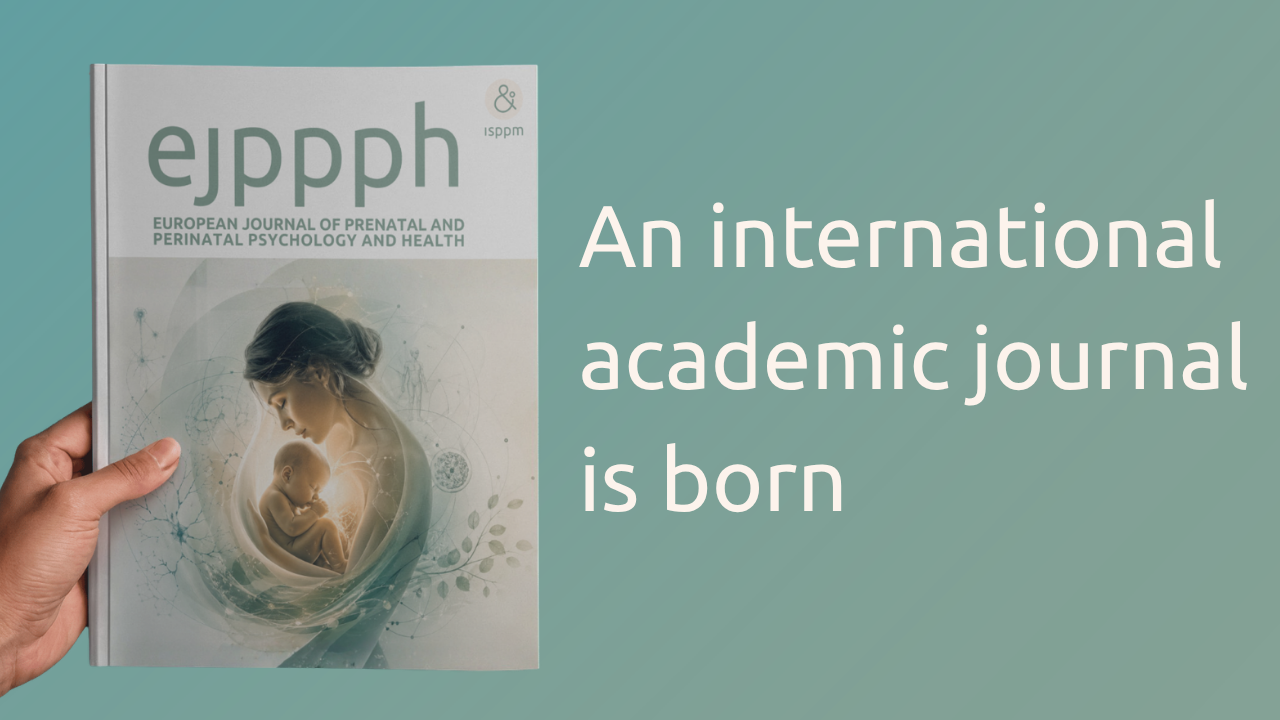
The logical consequence of this development is the attempt to establish a European professional journal as an organ of prenatal psychology, one that takes up the historical model of the International Journal in a modern form and develops it further in line with current scientific standards. With this first issue, this new format is to be brought into being.
For months, several scholars have worked on the logistical and scholarly foundations and formulated the standards for the journal. One of the most important supporters of this project, unfortunately, did not live to see this first issue: Prof. Dr. Otwin Linderkamp worked tirelessly until shortly before his death to ensure that a professional journal could once again be published on the basis of the International Society for Prenatal and Perinatal Psychology and Medicine (ISPPM). He, and the other members of the editorial team, are expressly thanked here.
And now we greet our readership and wish the European Journal of Prenatal and Perinatal Psychology and Health that it may reach and enrich as many people as possible.